


Gardening is a seasonal activity for many of us. We live in places where the weather conditions change throughout the year as the seasons progress, and we adapt with our gardens accordingly. This can be a delightful experience as we look forward to whatever the next season has to offer and the beauty that makes it unique. But, hypothetically, what if we want to grow plants out of season? What if we want to make something bloom in the middle of winter, or grow a vegetable plant at the “wrong” time of the year? Growing plants out of season is possible with a little work, and in this blog we’ll take a look at how you can grow plants or get them to bloom when it’s not the right season, why you might (or might not) want to do so, and a few other tips and tricks. Let’s dig in!
Gardzen Executive Summary
· Yes, it is possible to grow plants or get them to bloom out of season!
· The process of growing plants out of season is also referred to as “off-season gardening”.
· Growing plants out of season generally involves manipulating conditions like temperature, humidity, light, and soil nutrients.
· Different plants respond to off-season gardening in different ways. Sometimes it’s best to avoid trying growing them out of season.
· Off-season gardening is a great way to explore indoor gardening!
Off-Season Gardening in Winter
We’ll start with growing plants out of season in the winter. This is a long-standing gardening practice with a practical origin. Growing plants through the winter helped provide fresh food at an otherwise fallow time of the year, and it also served as a safeguard against the “hungry gap” in the spring. Winter off season gardening generally relies on some older gardening tools like container gardening, cold frames, or greenhouses.

There are a number of different approaches to off-season winter gardening. They may be used alone or in combination to get the desires result:
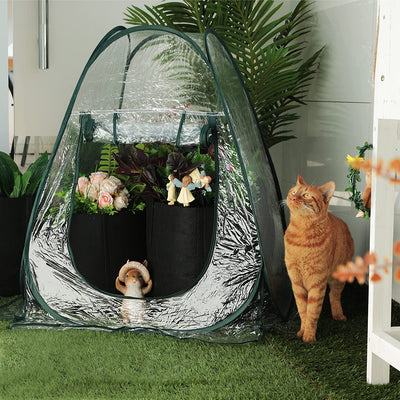
· Grow tunnels, row covers, and greenhouses can be used to extend the growing season for outdoor plants in either spring or fall. The idea is that by keeping the plants warm during the colder parts of the day, they’ll keep growing. We’ve found that for outdoor winter gardens, this works best with greens and herbs rather than fruiting plants like tomatoes.

· Larger heated greenhouses, also called hothouses, can be used to grow food all year long. This is a bigger undertaking than anything we’ve done. It involves building a permanent structure that’s safe to heat and then installing a safe, controllable heat source.
· Some plants can also be grown indoors over the winter, with the help of a sunny window or a grow lamp. Herbs in containers are a great choice for this, as are small-scale greens like lettuce, spinach, or microgreens. It’s probably best to just let container veggies like tomatoes, peppers, eggplant, and the like rest for the winter rather than trying to force them to grow.

There are some other options, of course, but these all have a few key things in common so we’ll focus on that for now. First, they control temperature, keeping the plant warm enough so growth continues. They also control moisture and humidity, again mimicking ideal growing conditions as closely as possible. Finally, they ensure the plant has enough light that its growth cycle continues. All of this involves careful positioning and monitoring. Remember, you’re convincing a plant to do something out of character!
Off-Season Gardening in Summer
Summer off-season gardening is in a way simpler. Winter off-season gardening involves growing plants out of season either by extending the spring or fall growing time into winter or fooling the plant into growing all winter long. Summer off-season gardening by contrast is an exercise in keeping things cool, limiting or control sun exposure, or otherwise minimizing the effects of the summer weather. There are some tricks we can use to do this, for both indoor and outdoor gardens:
· Providing shade, either by using a shade cloth or cover or by moving container plants into a shadier location, is an easy way to protect them from seasonal heat. This can work well to get a few more weeks out of greens like lettuce, spinach, collards, and kale. Make sure to mount shade cloths high enough over the plant to allow air circulation, otherwise it may trap heat and cause the problems we’re trying to solve!

· Moving containers into the shade or even indoors is another option. This can provide cooler temperatures for both air and the ground beneath the container and help keep things cool enough to grow for a while longer.
· Indoor gardening is really the best choice for most off-season gardening, but especially so in the warmer months. You have greater control over temperature, light, and moisture, and with the clever use of a small greenhouse you can keep many plants growing happily all year long.

While off-season gardening and growing plants out of season may seem like an ideal away to grow the plants you love all year long, there are a few other considerations to bear in mind before jumping in. What are they? We’re glad you asked . . .
The Limits of Growing Plants Out of Season
Plants are living beings. They have nutritional and environmental needs, a life cycle, and a life span just as all living beings do. Growing plants out of season deliberately manipulates and subverts their natural cycles, and while that’s not necessarily a bad thing it is something to remember as you engage with off-season gardening. Many perennials use the colder months as a time to rest and regenerate for the growing season ahead. They need that down time, and pushing them to keep growing all year long can be stressful to the health of the plant. Annuals and biennials have a reproductive cycle; at some point the plant needs to run to seed. We can use out of season gardening techniques to extend their growing season, but they will eventually need to live out their purpose and produce more seeds for the next generation of plants.
What we’re trying to say is this: gardening is about working with nature and natural cycles. While we manipulate those in various ways, it’s important to remember that plants do have season needs and that those needs should be met. Extending or expanding the growing season is a helpful thing, but we should remember that we’re part of the natural cycle too. Give your plants time and space to be themselves and live through their life cycles, in other words.

We’ve learned that every gardener has their own take on growing out of season and off-season gardening, and we’d love to hear yours. Drop us a line in the comments or via email and let us know your thoughts. Gardzen is all about community and we love to hear from you!
Leave a comment