


The peony is a classic garden plant, and many of us likely have a few in our flower garden or landscaping spaces. They’re popular both as garden plants and as cut flowers for floral bouquets, due to the wide variety of colors and sizes available. With somewhere between 30 and 40 species of peony available, it’s tough to know where to begin. But don’t worry—Gardzen is here to help. Let’s dig in and learn a bit more about growing and loving peonies, and how you can bring the peony into your home garden.

Paeonia and Paeoniaceae
Some of us may want to refresh our understanding of how plant species and families are organized, but the peony occupies an interesting place in the world of plant taxonomy. All peonies are members of the genus Paeonia, which is the only extant genus in the family Paeoniaceae. Going up one level, they belong to the order Saxifragales, making them distant relatives of currants, gooseberries, and witch-hazel.

Peonies have what botanists refer to as a disjunct distribution, meaning that while all peonies are members of same family and genus, they developed in separated geographical regions. Some peonies developed around the Mediterranean, and others developed in East Asia. They have a long history of human cultivation in both places, which in part explains the range of varietals and colors available.
Peony varietals vary widely in color and size, but are generally between two and six feet/60-180cm in height. Some are woody shrubs, some have herbaceous stems that are easy to cut. The latter are most popular in floral arrangements and florists shops as they’re both easy to manage and live longer in a vase of water. Gardeners and florists generally refer to wood shrub peonies as “tree peonies” and the herbaceous stemmed peonies as . . . “herbaceous peonies.” Sometimes garden nomenclature is easy!

The Different Types of Peony Flowers
We’ve grown peonies in the Gardzen Test Gardens, but we didn’t know that there’s a complex and detailed nomenclature around peony flowers. These different names help distinguish the shapes and forms that peonies take—particularly herbaceous peonies. Here’s a short introduction to some of the classifications of peony flowers. There may be more, but these are the ones we’ve learned about:
· Single: Single peony flowers have visible carpels and stamens, surrounded by a single or double row of broad petals.
· Japanese: These are distinguished by broader staminodes, which help carry pollen. They have a single or double row of petals similar to single flowers.
· Anemone: With no visible stamens, anemone peonies are defined by a single or double row of broad petals encircling a set of narrow staminodes which curve inward.
· Triple: This one’s easy—triple peonies have a triple row of broad, overlapping petals.
· Semi-double: Semi-double peonies have the most complex flower shapes, with a single or double row of broad petals encircling more broad petals growing among the stamens.
· Bomb: Sometimes called “pom-pom” peonies, these have a single or double outer ring of broad petals encircling a dense “poof” of shorter, narrower petals.
· Double: Many broad petals, and only broad petals, some of which may be stamens or carpels that have been bred to match the petals’ shape.

Again, there may be more classes of peony flowers than this, but these are the ones we’ve learned about thus far. If you know of more—or have more experience with peonies—please let us know in the comments and help us all learn a bit more!
Growing and Caring for Peonies
Peonies flower for seven to eight weeks, and different varietals flower at different times in the spring and summer. Savvy gardeners and landscapers can thus plant different kinds of peonies for a parade of blooms lasting months.
With that said, different kind of peonies also require different kinds of care. If you’ve inherited a garden or landscape full of them, your first project is to figure out what varietals of peony are growing and in what parts of your space. Peony care broadly follows the two classifications of peony—tree peony and herbaceous peony:

· Tree peonies are woody shrubs or small trees and in temperate climates and won’t die back to the ground when the weather turns cold. They can grow up to 6 feet/180cm tall, and generally have larger flowers than their herbaceous cousins. They also tend to flower earlier. Tree peonies tend to be outdoor hardy in USDA climate zones 3-8 and may require watering in warmer weather. They like to be fertilized with a slow release plant fertilizer (3-5-5) after their blooms have finished in the spring or summer. Avoid high nitrogen fertilizers, as they tend to produce a lot of green growth but no blooms.
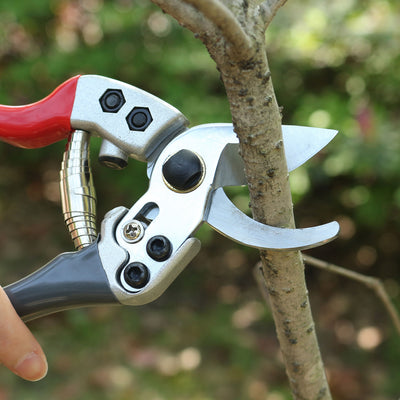
· Herbaceous peonies are best planted in the fall in well drained, well tilled and well composted soil. They prefer full sun in most climates, but some varietals do benefit from a bit of shade in really sunny and hot regions. They require a fair amount of space 3-4 feet/~1-1.3 meters between either other peonies or other large plants like trees or shrubs. They require regular watering and like their tree peony relatives like slow release plant fertilizer after their blooms have passed. In the fall, clear away all dead growth, cutting stems back to about 2 inches/5cm above the surface of the soil. Then after the ground freezes apply one inch/2.5cm of mulch over the crown of the plant.

The Wide World of Peonies
Peonies are best planted from tubers or existing root stock in the fall, and while mature plants may be divided that’s a whole blog unto itself. This article has run long enough so we’ll plan on revisiting peonies at a later date. Hopefully, however, we’ve piqued your curiosity and interest in these remarkable plants and the beauty they bring to a garden space!


I love peonies! Thank you for the article
I didn’t know peonies were so far-flung! It would be interesting to read a similar blog about poppies. I get the two mixed up sometimes :)
Leave a comment