


We’re big fans of gardening with native plants. Incorporating natives into our garden spaces has so many environmental advantages, but it also lets us capture the unique character and personality of the part of the world we call home. As we’ve mentioned before, the Gardzen Test Gardens are located in coastal North Carolina, USA and we try showcase plants that our native to that region. One of our new additions this season is Calycanthus floridus, a regional plant also known as spicebush, Carolina allspice, and eastern sweetshrub. This plant fascinates us in so many ways and we wanted to share our joy and our journey with you. So let’s dig in together and learn about Calycanthus floridus, how it grows, and what Carolina allspice brings to a garden space.
Gardzen Executive Summary
· Calycanthus floridus has many names, all referring to the same plant.
· The names reflect the traditions of different regions of its native range and remind us of the importance of using proper Latin binomials.
· Calycanthus floridus or Carolina allspice is native to the southeastern United States.
· A large fragrant shrub, Carolina allspice is popular as an ornamental plants in addition to its other traditional uses.
· Carolina allspice is fairly easy to grow, and southeastern gardeners who like natives and have the space may want to consider Calycanthus floridus for their gardens.

What is Carolina Allspice (Calycanthus floridus)?
As we allude in the introductory paragraph, Calycanthus floridus is a plant with many names. We like the moniker “Carolina Allspice” so we’ll likely be using that throughout the article. However, the same plant has many local and colloquial names: “spicebush”, “sweetshrub”, “Sweet Betsy”, “eastern sweetshrub” and the utterly delightful “sweet bubby bush”. The many names speak to the plant’s rich history with humans and the importance of using Latin binomials when identify plants!
Carolina allspice is a large shrub, growing roughly 6-12 feet/2-4 meters in height and a bit wider than that horizontally. The dark green leaves are pretty, with an oval shape, lighter colored veins, and a pale underside. What really makes this plant stand out are its flowers and their fragrance. The blooms are a dark red-brown color with a delightfully spicy scent that is reminiscent of pineapple and strawberry fruit. The plant is native to many parts of the southeastern USA, and its bark has traditionally been used in the kitchen as a substitute for cinnamon or allspice. The leaves and flowers are purportedly used in teas. However, given that all parts of Calycanthus floridus contain an alkaloid that may cause heart convulsions in some people we do not recommend ingesting any part of Carolina allspice!

Growing Calycanthus floridus at Home
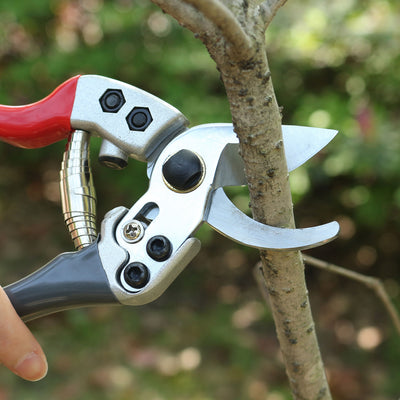
The good news is that this is a fairly easy plant to grow—so much so that it’s become naturalized in places far from its native range. Carolina allspice tolerates a wide variety of soil and water conditions, but it prefers a rich loamy soil that’s well-watered but not saturated. It also has few insect pests and tolerates drought, heat, and sun, but grows best with some afternoon shade. It does need a fair amount of space, and will put out suckers and spread throughout the area in which it is planted. We can’t find any information about growing it in containers, but we’ll keep looking. Carolina allspice should be pruned after flowers in order to maintain the desired shape, but can be left to grow “wild” if so desired.
Calycanthus floridus is often grown for its size as well as its fragrance, making it popular as a natural privacy fence, an accent piece in a sensory or fragrance garden, or a point of vertical interest amongst other landscaping shrubs. As with its growing preferences, the uses of Carolina allspice are varied and versatile.

How to Propagate Calycanthus floridus
The textbook answer for propagating Carolina allspice seems to be “from seed”, and there are many seeds and many cultivars available. We purchased our plant as a seedling from a local nursery, and as of now we’re not sure what the cultivar or varietal is. That’s one of the many joys of gardening with native plants: sometimes we get a few surprises and the chance to explore local varieties!

Carolina allspice adds a lot to any garden space, and we’re hoping that it will (pardon the expression) spice things up even further here at the Gardzen Test Gardens. When ours gets a bit bigger, we may try propagating a cutting in a container and seeing how that goes, so stay tuned for further developments and as always thank you for taking this gardening journey with us!
Leave a comment